Turning a cybersecurity website into a trusted publishing platform

The Challenge
Microsoft Security Insider was created to position Microsoft as a trusted source for cybersecurity news, thought leadership and threat intelligence, drawing on insights from more than 20 threat intelligence teams and trillions of daily security signals.
The experience was underperforming. Bounce was high, engagement was low, navigation and wayfinding were limited, authors and contributors were not clearly surfaced, and the site lacked a strong SEO foundation.
The opportunity was to turn Security Insider into a more useful, credible and engaging destination for security professionals and the media while creating a structure that could support ongoing publishing at scale.
Key Findings
Audience research identified two important groups with different but related needs.
CISOs and security practitioners needed to stay current on emerging threats, tactics, detection and response. They had limited time, so information needed to be easy to scan, navigate and consume across devices.
Media and journalists were looking for timely intelligence, expert perspectives and credible behind-the-scenes access to Microsoft’s security expertise. They also needed content that could be quickly understood and used across different formats.
Those findings led to a clear strategic shift:
From a website to a trusted publisher.
The Solution
From website to trusted publisher
I helped define the strategy for Security Insider as an ongoing publishing platform rather than a collection of individual pages.
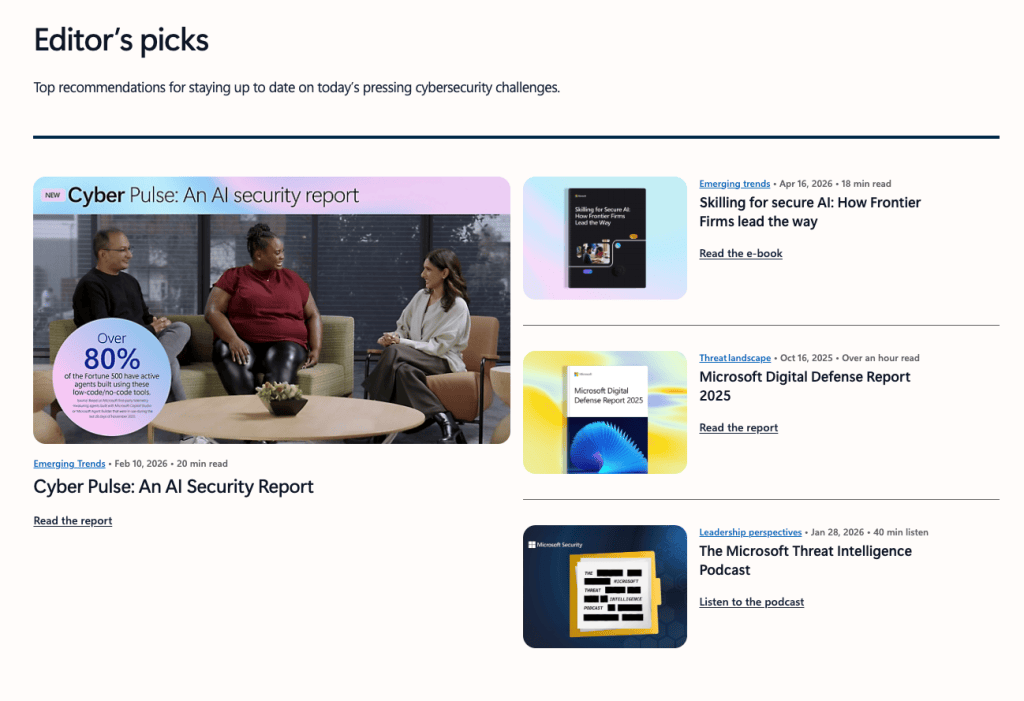
The experience needed to make Microsoft’s security expertise easier to discover, understand and return to. That meant organizing the site around audience needs, editorial themes and content utility, while giving Microsoft a clearer publishing model for continually sharing threat intelligence, research and expert perspectives.
Creating a clearer information architecture
We reworked the experience within Microsoft’s existing template system to create stronger hierarchy, clearer pathways and more intuitive navigation.
Content category pages gave users better entry points into the site, while improved page structure helped surface the most important information first and guide people toward related content rather than creating dead ends.
The work focused on making a complex and high-volume subject easier to navigate within Microsoft’s existing design and publishing framework.
Building content around audience needs

The content strategy expanded Security Insider beyond a traditional article model.
We introduced recommendations for different formats including articles, interviews, video, infographics and interactive data experiences, giving Microsoft more ways to communicate complex security intelligence depending on the subject and audience need.
Topic tagging also created stronger connections between related content, improving discovery for readers while supporting search visibility.
Turning threat intelligence into an interactive experience
We also developed an interactive threat intelligence tool that helped users explore active threat actors through a more structured and visual experience.
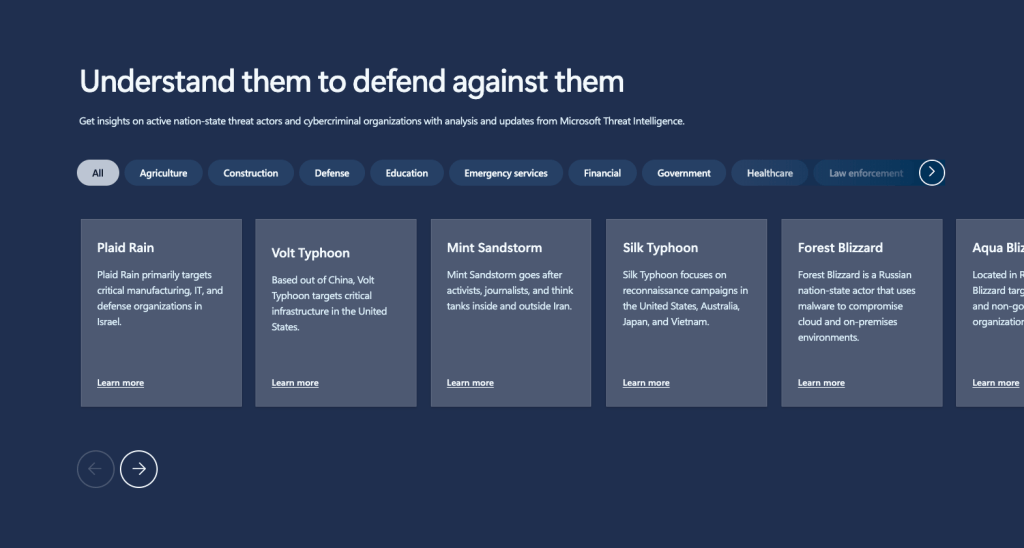
The tool made complex intelligence easier to navigate and gave Security Insider a utility beyond traditional editorial content. Users could explore different threat actors, understand their activity and move into deeper analysis, reinforcing the shift from a content website to a more useful publishing platform.
Making expertise more visible
Credibility was central to the publishing strategy.
The experience placed greater emphasis on Microsoft’s experts, contributors and threat intelligence teams, making the source of the information more visible and helping reinforce Security Insider as a destination built around expert knowledge rather than anonymous corporate content.
Designing for engagement and return visits
The information architecture, content hierarchy and editorial model were designed around clear behavioural goals: help people find relevant information faster, engage more deeply with content and return to Security Insider as new intelligence was published.
The resulting experience connected audience research, content strategy, UX and editorial structure directly to measurable engagement outcomes.
Outcomes
- 327% increase in engagement rate
- 63% increase in return visits
- 132% increase in average time on site
- Growth achieved without paid media
Audience feedback also highlighted the improved navigation and the value of interactive experiences such as Threat Actor Insights.
My Role
I led audience research, experience strategy, content strategy and information architecture for Microsoft Security Insider.
The work connected content and UX decisions directly to engagement goals, helping create an experience that encouraged deeper consumption, stronger discovery and repeat visits.
