Redesigning Mazda.ca into a connected car buying and ownership platform
Case Study video
The Challenge
Mazda Canada needed to transform its digital presence to reflect changing car buying and ownership behaviours in Canada.
The new Mazda.ca needed to strengthen the Mazda brand, increase the volume and quality of visits, improve conversion, reduce the cost of acquiring new buyers and create a technology foundation that was easier to maintain and evolve.
The ambition was to create a connected experience for both prospective buyers and existing owners, bringing together brand, research, shopping tools, dealer interactions and ownership support across the customer journey.
Key Findings
Car buying unfolded across a long journey from inspiration and comparison through purchase, ownership, maintenance and eventual repurchase.
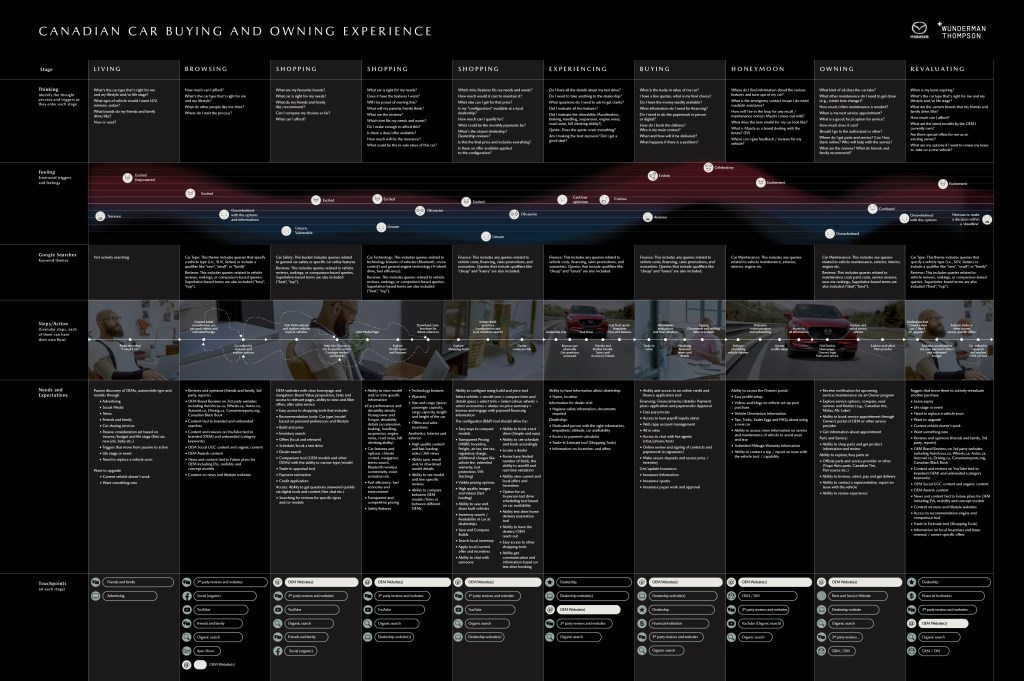
People needed different kinds of support at different stages. Early in the journey, they wanted inspiration and confidence. As they moved closer to purchase, they needed detailed vehicle information, comparison tools, transparent pricing, offers and access to dealers. Existing owners needed useful information, services and support throughout the life of their vehicle.
Research also showed the importance of connecting emotional and practical needs. Mazda had a distinctive point of view around the pleasure of driving, while customers also needed efficient tools and clear information to make complex decisions.
The website therefore had an opportunity to connect the Mazda brand with the entire buying and ownership experience, giving people relevant content, tools and support at the moments they needed them.
The Solution
Spark the joy of driving
I helped define the experience vision around a simple idea, Spark the joy of driving.

The vision connected Mazda’s emotional brand promise with the practical needs of buyers and owners. Mazda.ca would support people throughout their relationship with the brand while making the experience feel distinctly Mazda.
The strategy brought together six ideas. The experience would express the Mazda brand, use data and intelligence to become more relevant, help people select the right vehicle, use content to support decisions, prepare the platform for commerce and extend the relationship into ownership.
Designing the customer experience
The customer journey became the foundation for the UX. Research informed the information architecture, page hierarchy, interaction patterns and tools across the site.
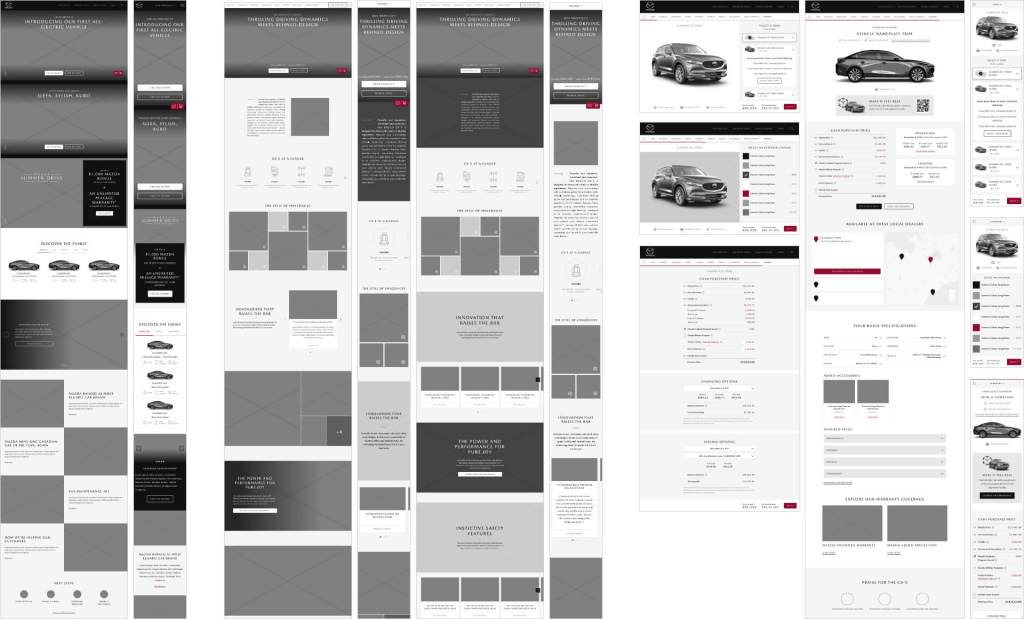
We created wireframes for key pages and shopping experiences to determine what information people needed first, how complex decisions should be broken into manageable steps and how journeys should work consistently across desktop and mobile.
Making vehicle selection easier
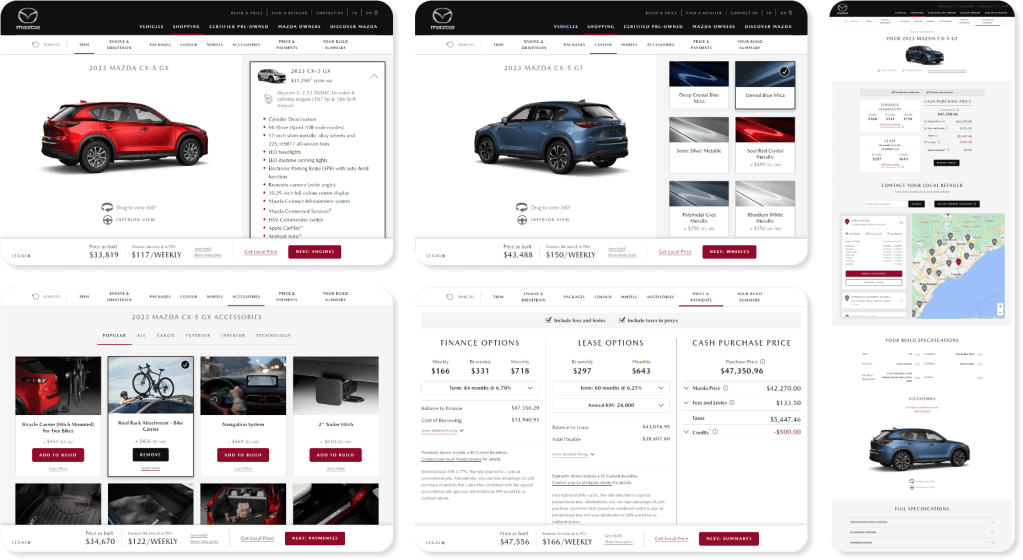
A major part of the UX work focused on tools that helped customers move from exploration to purchase.
The Build & Price configurator organized vehicle combinations, features, colour choices, pricing and financing into a clear sequence of decisions. Customers could see their vehicle update as they configured it, understand costs and payment options and move directly toward a dealer lead.
The experience required thousands of vehicle assets and a system capable of presenting that complexity in a way that felt simple to the customer.
Creating a scalable design system
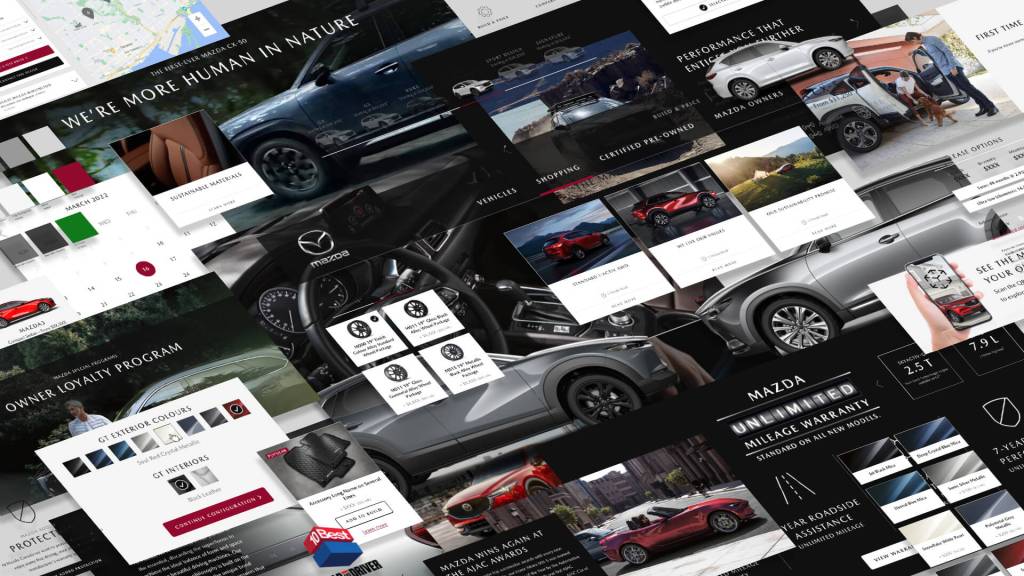
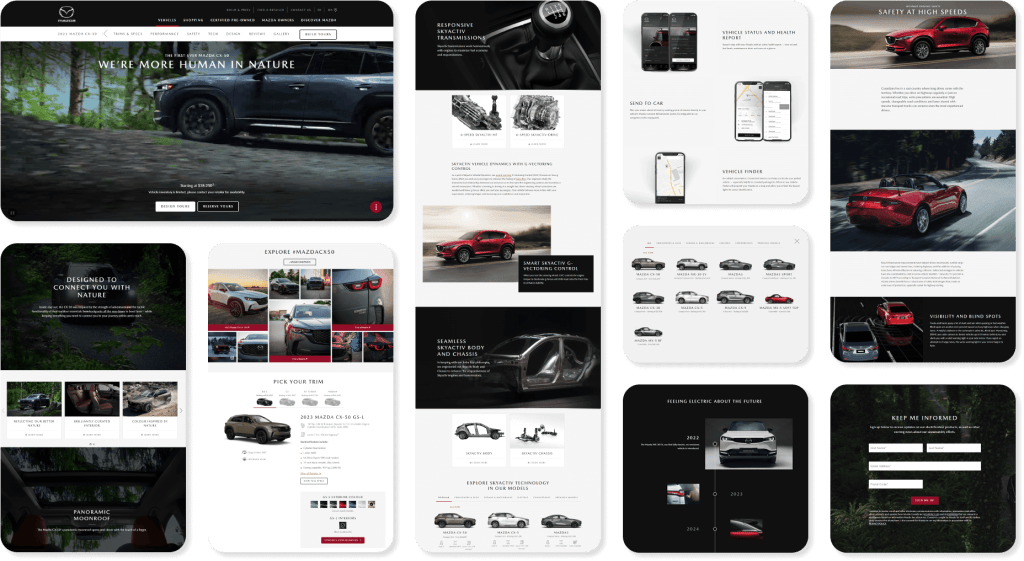
The experience strategy was translated into a responsive and accessible component library that could support the full Mazda.ca ecosystem.
The system was designed for vehicle detail pages, shopping tools, educational content, corporate pages and campaign experiences. Strong hierarchy, generous spacing, immersive imagery and clear interaction patterns created a consistent experience while giving different types of content room to work.
This gave Mazda Canada a flexible foundation for creating and updating experiences consistently across the site.
Building content around customer needs
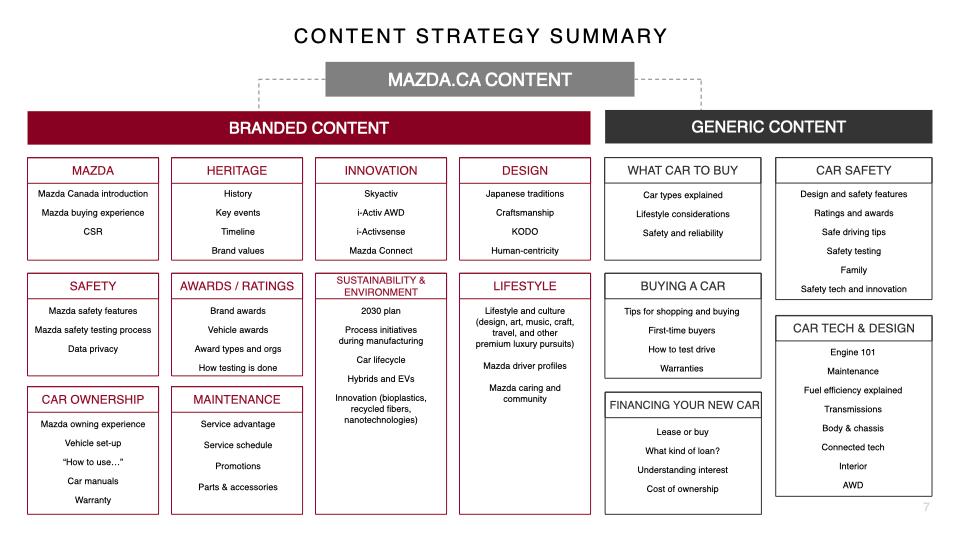
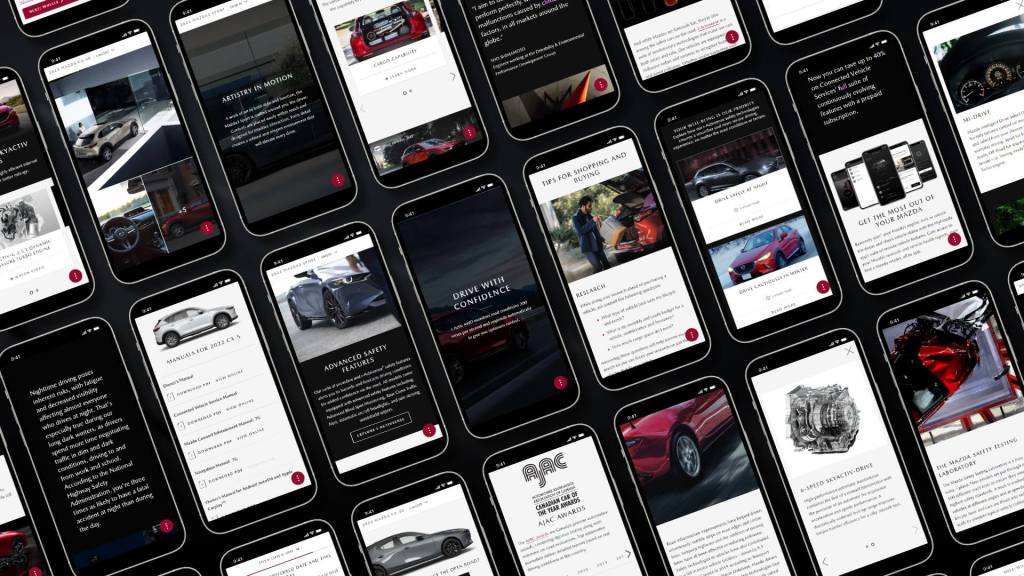
Content became part of the product experience, helping people discover Mazda, understand vehicles and technology, compare options, make purchase decisions and get more value from ownership.
Customer research, search behaviour and the buying journey informed the content strategy. Content was organized around the questions and decisions people faced throughout the journey, creating opportunities to serve both people actively considering Mazda and people looking for broader automotive information.
The same approach connected inspiration, selection, buying and ownership so that content supported the relationship with Mazda over time.
Building a platform designed to evolve
The new Mazda.ca was built on Optimizely to support scalability, multilingual content, personalization and future commerce capabilities.
The platform connected to third-party systems supporting pricing, financing and lead management. We also established a measurement framework, tagging structure and analytics foundation so Mazda could understand performance and continue improving the experience after launch.
The technology, content and design systems were developed as one connected platform that Mazda Canada could continue to expand as customer expectations and business needs evolved.
Outcomes
- 4X page views per session
- 50% reduction in bounce rate
- 5X Lead Generation
- Created a connected experience spanning discovery, shopping, purchase and ownership
- Established a scalable UX, design, content and technology foundation for Mazda Canada
My Role
I led strategy, UX and content for the Mazda Canada transformation.
My work included customer research, journey strategy, experience vision, information architecture, wireframing, content strategy, SEO, platform strategy and measurement.
I worked directly with Mazda Canada and Mazda’s global teams and managed coordination across the broader agency ecosystem, including SEO, media, analytics and technology partners.
Check out the website and work here: Mazda.ca
